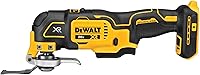
8 Best Corded Oscillating Multi-Tools (November 2026)
The best corded oscillating multi-tools include the DeWalt DWE315SK Corded Multi-Tool for mixed home repairs, the WORKPRO 3.0A Corded Multi-Tool for first renovation kits, and the Jorgensen Corded Multi-Tool for small refinishing projects.
On this page (8 sections)
- Which corded oscillating multi-tools stand out?
- How did we choose these corded oscillating multi-tools?
- Which features matter most when choosing a corded multi-tool?
- How should you set up a corded oscillating tool?
- Which common mistakes spoil cuts and sanding?
- How do you care for the tool and accessories?
- How do corded and cordless oscillating tools compare?
- Which corded oscillating multi-tool should you choose?
The DeWalt DWE315SK is the best corded oscillating multi tool for most home repairs, thanks to trigger-based speed control and quick accessory changes. Pick WORKPRO for preset speeds and a mixed starter kit, or Dremel when flush-cut access is your main concern.
A corded model makes sense for work near an outlet, especially when several small cuts or sanding patches would otherwise mean managing batteries. Choose around your first project, then consider the attachments you'll need later.
Our guide to choosing an oscillating multi-tool explains the main tool features. For cutting and attachment technique, see how to use an oscillating multi-tool.
Our picks at a glance
-
1

-
2

-
3

Which corded oscillating multi-tools stand out?
DeWalt is the strongest general choice, while the other kits solve more specific needs, including preset controls, hand clearance and sanding supplies. Start with how you'll hold and use the tool, rather than choosing the largest accessory bundle.
DeWalt DWE315SK Corded Multi-Tool: Best for mixed home repairs
- 3 amp motor
- Dual-grip variable-speed trigger
- Quick-change accessory system
- Bright LED light
Trigger-based speed control suits jobs that need careful starts and changing pressure. The cutting and sanding kit covers trim work and small surface repairs.
Pros
- Adjust speed through the trigger
- Wrench-free accessory changes
- LED illuminates dark work areas
Cons
- Add a separate scraper for caulk or adhesive removal
The DeWalt DWE315SK suits someone moving between careful trim cuts and small sanding jobs. Its dual-grip variable-speed trigger lets you change speed through finger pressure, so you can ease into a cut without reaching for a separate dial.
The 3 amp tool has wrench-free accessory changes and a universal adaptor for most oscillating accessory brands. Those features help when a repair calls for switching blade shapes or moving from cutting to sanding.
Its 19 cutting and sanding attachments include a wood-with-nails blade, fast-cut wood blade, semicircle blade, sanding pad and paper. The LED helps illuminate a cabinet interior or shaded baseboard, though it doesn't replace a clear sightline.
Choose it for varied repairs where speed changes matter. Skip it if you prefer setting a dial and keeping the same output, or if scraping is your first job and you want that attachment included.
Our DeWalt DCS356B oscillating multi-tool review covers a cordless alternative for work away from outlets.
WORKPRO 3.0A Corded Multi-Tool: Best for first renovation kits
- 3 amp motor
- 7 speed settings
- Tool-less accessory changes
- 17 accessories
A mix of cutting, scraping and sanding attachments suits a first set of household repairs. Preset speeds let you select an output before starting each task.
Pros
- Mixed starter accessories
- Tool-less accessory changes
- Universal accessory interface
Cons
- Speed changes use separate settings rather than trigger pressure
WORKPRO suits a first renovation kit when your task list includes cutting, scraping and sanding. Its preset speed control lets you choose an output before starting, rather than managing speed through trigger pressure.
The 3 amp motor has 7 settings, with a published range of 15,000–23,000 RPM. A top-mounted on/off switch handles starting and stopping.
The 17-piece accessory set includes wood/metal blades, wood/plastic blades, a scraper, sanding pad and 10 sanding sheets. That mix is useful when a room repair moves from trimming a small piece to lifting residue and smoothing an edge.
Accessory changes need no spanner, and the universal interface fits most accessory brands. Confirm the mount and material rating when buying replacements.
Choose WORKPRO for a varied starter kit and separate speed settings. Skip it if you want trigger-based speed changes or a lower starting speed for tasks where the accessory instructions call for one.
Jorgensen Corded Multi-Tool: Best for small refinishing projects
- 7 speed positions
- 8,000–16,000 OPM
- Universal fit system
- 16 accessories
Sandpaper from 60 through 240 grit supports several stages of a small refinishing job. Flush-cut blades and a scraper also cover nearby repair work.
Pros
- Coarse through fine sanding grits
- Quick-change accessories
- Slim body with soft grip
Cons
- Only 2 sanding sheets in each included grit
Jorgensen is a useful match for small refinishing jobs that involve several sanding stages. Its 60, 80, 120, 180 and 240 grit papers cover coarse shaping through finer smoothing, with 2 sheets of each grit.
The 16-piece kit also includes flush-cut wood blades, a bi-metal universal blade, a scraper and a sanding pad. You can trim a damaged edge, scrape a small patch and prepare it for finishing without starting with a separate accessory bundle.
Its 7 speed positions cover 8,000–16,000 OPM, and the slim body has a soft grip. The quick-change mechanism includes an additional locking bracket, while the universal fit system accepts most brands of accessories.
Choose it for small repairs where grit variety matters more than paper quantity. Skip it if you expect to use many sheets of one grit, since the included pairs won't last through a large refinishing project.
Follow the finish instructions when choosing your final sanding grit.
Dremel Multi-Max MM50 Kit: Best for awkward flush cuts

- 5 amp motor
- Compact head
- Angled body
- Tool-less blade change
The compact head and angled body suit cuts where the tool housing or your knuckles could obstruct access. A twist-and-push system handles accessory changes.
Pros
- Compact front end
- Angled body provides hand clearance
- Tool-less blade changes
Cons
- Minimum speed is higher than Jorgensen and ENERTWIST
The Dremel MM50 suits flush cuts where a straight tool body would crowd your hands. Its compact head and angled body address access around the cut, which can matter more than a larger accessory bundle.
The 5 amp motor is the highest-amperage motor in this group. A variable-speed dial covers 10,000–21,000 OPM, and the twist-and-push change system lets you swap accessories without a wrench.
For a door casing or cabinet edge, picture the full working position before choosing: blade against the surface, body behind it and both hands clear. The angled shape is most useful when that arrangement would otherwise put your knuckles against the work.
The kit includes accessories and a carry bag, and Dremel backs it with a limited 2-year warranty.
Choose it when hand clearance is the deciding issue. Skip it if your work is open and accessible and another kit already includes the particular blade or sanding supplies you need.
Hammerhead 2.2A Multi-Tool: Best for occasional trim repairs

- 2.2 amp motor
- Variable speed dial
- Universal collet system
- Bright LED light
A compact body, LED and basic blade set suit occasional trimming and detail sanding. Choose it when you need a few core attachments rather than a large starter kit.
Pros
- Compact body with soft grip
- LED lights the work area
- Universal collet system
Cons
- Small accessory supply
- No scraper included
Hammerhead fits occasional trim repairs when you need a basic tool and a few core attachments. Its compact body, soft grip and LED suit small jobs around cabinets, door trim and other shaded work areas.
The 2.2 amp motor reaches up to 20,000 OPM, with a variable-speed dial for adjustment. A universal collet accepts standard oscillating accessories.
The starter set contains a flush-cut blade, semicircle blade, sanding pad, 3 sanding sheets and an Allen key. Match those attachments to your first repair, then add a material-specific blade or scraper when the job calls for it.
Choose it for occasional cutting and detail sanding with modest accessory needs. Skip it if you already have a long task list involving scraping, multiple blade types or repeated sanding, since you'll need more supplies.
Our guide to oscillating multi-tool uses explains where a flush-cut blade, scraper or sanding pad earns its place.
AVID POWER 3.5A Multi-Tool: Best for two-handed control

- 3.5 amp motor
- 6 speed settings
- 4.5° oscillation angle
- Auxiliary handle
The auxiliary handle gives you a second grip point for accessible cutting and scraping work. A quick-change lever makes switching between repair tasks straightforward.
Pros
- Auxiliary handle included
- Cutting and scraping attachments
- Wrench-free accessory changes
Cons
- Side handle needs room around the work
- Only 5 sanding sheets included
AVID POWER suits buyers who want a second grip point for accessible cutting, scraping and sanding tasks. The included auxiliary handle gives your supporting hand a place to guide the tool while keeping clear of the accessory.
Its 3.5 amp motor has 6 speed positions and a 4.5° oscillation angle. A locking lever handles wrench-free accessory changes, and the universal fit system matches most accessory brands.
The kit includes plunge blades, a semicircle blade, scraper, sanding pad and 5 sanding sheets. That covers a useful mix of household repairs without making sanding paper the main part of the bundle.
The side handle needs space around the tool, so consider its position near a wall or inside a narrow cabinet. A second grip should help guide the cut, not encourage you to push harder.
Choose it for open work where two-handed control matters. Skip it if your main task is reaching into tight recesses or completing enough sanding to need a larger paper supply.
ENERTWIST 4.2A Multi-Tool Kit: Best for repeated sanding repairs

- 4.2 amp motor
- 6 speed settings
- 25 sanding sheets
- Auxiliary handle
A larger sanding-sheet supply suits several small repairs across a room. Cutting blades, a scraper, an accessory adaptor and a handle round out the kit.
Pros
- 25 sanding sheets included
- Auxiliary handle and carrying bag
- Wood-with-nails bi-metal blade
Cons
- Large accessory count includes many sanding sheets
ENERTWIST suits a repair list with several small sanding patches, rather than one quick cut. Its 25 sanding sheets are the largest paper supply in this group, alongside a sanding pad and cutting accessories.
The kit includes 3 fast-cut wood blades, a wood-with-nails bi-metal blade, a semicircle blade and a scraper. An auxiliary handle, multi-brand adaptor and nylon carrying bag round out the set.
Its 4.2 amp motor uses 6 speed settings across 8,000–16,000 OPM. Accessory changes work by twisting the knob, fitting the attachment and pressing it down.
This bundle makes sense for moving around a room repairing trim and smoothing small areas. Keep paper for different surfaces separate so grit carrying metal debris doesn't mark a wood patch.
Choose it when repeated small repairs will use the included supplies. Skip it if you mainly want to sand broad panels, doors or tabletops, where a dedicated sander is a better match.
GALAX PRO 3.5A Multi-Tool: Best for coarse sanding prep

- 3.5 amp motor
- Variable speed dial
- Quick-clamp accessory changes
- 24 sanding sheets
Repeated sheets in 4 coarse-to-medium grits suit small surface-prep jobs. The kit also includes cutting blades, a scraper and a triangular sanding pad.
Pros
- 6 sheets of each included grit
- Tool-free quick clamp
- Cutting and scraping attachments
Cons
- Add finer paper for work beyond 120 grit
- Included plunge blades suit soft metals rather than harder metals
GALAX PRO fits small surface-prep jobs where you'll use several sheets of coarse-to-medium paper. Its 24 sheets cover 60, 80, 100 and 120 grit, with 6 sheets of each.
That supply suits repeated patches more than a single fine-finishing task. Add finer paper if your finish requires a smoother surface, rather than assuming the included range covers every stage.
The 3.5 amp tool has a variable-speed dial covering 15,000–22,000 OPM and a 4.5° oscillation angle. Its quick-clamp system changes attachments without a wrench.
Alongside the triangular sanding pad, the kit includes plunge blades, semicircle blades and a scraper. The plunge blades suit wood, plastic and soft metals; GALAX PRO recommends a separate bi-metal blade for harder metals.
Choose it for repeated sanding prep with some cutting and scraping. Skip it if fine finishing or harder-metal work is your main reason for buying, since those tasks need additional accessories.
How did we choose these corded oscillating multi-tools?
We compared speed controls, accessory systems, working access and useful kit contents for common home repairs. DeWalt and WORKPRO share the highest score, with DeWalt first because its trigger suits changing speed during a cut.
A lower-ranked kit can still be the right fit when its body shape, handle or sanding supply solves your particular job. Compare the features below after deciding which tasks matter most.
| Product | Best for | Motor | Speed control | Included accessories | Our score |
|---|---|---|---|---|---|
| DeWalt DWE315SK Corded Multi-Tool | mixed home repairs | 3 amp | Dual-grip variable-speed trigger | 19 cutting and sanding attachments | 8.0 |
| WORKPRO 3.0A Corded Multi-Tool | first renovation kits | 3 amp | 17 pieces | 8.0 | |
| Jorgensen Corded Multi-Tool | small refinishing projects | 16 pieces | 7.8 | ||
| Dremel Multi-Max MM50 Kit | awkward flush cuts | 5 amp | 7.6 | ||
| Hammerhead 2.2A Multi-Tool | occasional trim repairs | 2.2 amp | Flush-cut blade, semicircle blade, sanding pad and 3 sanding sheets | 7.5 | |
| AVID POWER 3.5A Multi-Tool | two-handed control | 3.5 amp | Blades, scraper, sanding pad, papers and side handle | 7.3 | |
| ENERTWIST 4.2A Multi-Tool Kit | repeated sanding repairs | 4.2 amp | 7.2 | ||
| GALAX PRO 3.5A Multi-Tool | coarse sanding prep | 3.5 amp | 7.0 |
Which features matter most when choosing a corded multi-tool?
Blade fit, control and working clearance come first. Motor size and accessory totals help narrow the choice, but neither fixes a blade that can't reach the cut or suit the material.
Which corded oscillating multi-tool controls suit your work?
A trigger suits cuts where you want to start gently and change speed as the blade enters the material. A dial or preset selector suits work where you want a chosen speed while concentrating on guidance.
Use the accessory instructions to select a starting speed, then adjust to the material. With plastic, excess heat can soften the cut edge; with sanding, excessive speed and pressure can damage the surface.
Speed figures also need care when comparing tools. WORKPRO publishes its range in RPM, while several others use OPM, so don't treat those figures as a precise ranking of cutting performance.
How should you compare motor power and oscillation angle?
Use amperage as one part of the choice, after confirming access and accessory fit. A larger motor cannot make a dull or unsuitable blade cut cleanly.
Oscillation angle describes the accessory's side-to-side sweep. A wider sweep moves the teeth across a wider path, but blade shape, material and feed pressure still affect the cut.
For occasional trim work, controls and the right blade deserve more attention than chasing the largest number. For repeated work, also consider whether the tool's grip and working position suit the task.
What does universal accessory fit mean?
Universal fit broadens your accessory choices, but check the exact mount before buying a replacement. Mounting patterns, adapters and accessory requirements can differ.
Choose blade shape by access as well as material. A narrow plunge blade helps with a short opening, while a semicircle blade can suit a longer shallow cut where there is room for its wider edge.
Use a metal-capable blade for nails or metal, and a suitable abrasive accessory for grout. Our oscillating tool grout-removal guide explains how to protect nearby tile edges.
How much should included accessories influence your choice?
Count the attachments you'll use, rather than every piece in the box. A stack of sanding sheets adds consumable supply, while a suitable blade or scraper adds a different capability.
For example, a trim repair may need one wood blade and a sanding pad. Removing old caulk calls for a scraper, and a job near nails calls for a blade rated for that contact.
For refinishing, compare grit range and quantity separately. Several fine grits help with finishing stages, while repeated sheets of one coarse grit help with repeated material removal.
How should you set up a corded oscillating tool?
Plan the cut and fit the accessory before plugging in. A few minutes spent checking clearance, support and cord placement can prevent damage that no speed setting will fix.
- Identify what's behind the surface. Check for wiring, pipes, fasteners and finished surfaces that the blade could reach.
- Secure loose work. Clamp a small board or fitting so it cannot shift as the accessory starts cutting.
- Fit the correct accessory. Follow the tool's mounting instructions and confirm the clamp or fastener is secure.
- Route the cord behind you. Keep it away from the blade, sharp edges, water and places where someone could trip.
- Choose protection and a starting speed. Use eye and hearing protection, and dust control and respiratory protection appropriate to the material.
If you need an extension cord, follow the tool manual for its gauge, length and outdoor suitability. Keep the tool switched off while connecting power, and use the electrical protection required for the location.
For a door-jamb undercut, a scrap of flooring with the required underlayment can help establish the cut height. Protect the finished surface and check the blade path before starting.
For wall openings, set a shallow cutting plan instead of plunging to the blade's full reach. Our guide to cutting drywall with an oscillating tool covers access and hidden hazards in more detail.
Which common mistakes spoil cuts and sanding?
Too much pressure, the wrong accessory and poor support cause many avoidable problems. Let the accessory remove material while you guide its position.
Pushing harder when cutting slows
Stop and check the teeth, material rating and whether debris is crowding the cut. Forcing a stalled blade builds heat and makes it harder to hold the line.
Ease the blade clear as needed to release debris, keeping its movement controlled. Replace a worn accessory rather than trying to recover its cutting ability with extra pressure.
Plunging deeper than the job needs
Mark the required depth and keep checking your progress. Extra reach can damage the surface behind the cut, especially around flooring, trim and walls.
A narrow kerf doesn't show everything behind it. Stop if you cannot confirm a clear path.
Sanding with only the pad's tip
Keep the pad flat where the surface allows. Leaning heavily on a corner concentrates wear, can round an edge and may leave a hollow in the work.
Use light pressure and move across the patch. Start with the least aggressive grit that removes the defect, then progress as the surface and finish require.
Using the multi-tool for large demolition cuts
Choose another saw when the job needs long, deep or rough cuts through accessible stock. An oscillating tool earns its place through close access and controlled cuts.
For pipe or fastener work with more room, our guide to reciprocating saws for metal explains another option.
How do you care for the tool and accessories?
Unplug the tool before accessory changes, cleaning or inspection. Let hot blades cool before handling them, even when the mounting system needs no wrench.
Clear dust from the exterior and ventilation openings according to the manual. Check the cord, plug, attachment clamp and sanding pad for damage before the next job.
Replace torn paper, worn teeth and damaged pads promptly. A worn accessory adds heat and effort while reducing control.
Store blades so their edges don't strike other tools, and keep paper dry. Separate metal-working accessories and dirty sanding sheets from supplies intended for clean wood finishing.
How do corded and cordless oscillating tools compare?
Choose corded for work near reliable power; choose cordless for frequent moves away from outlets. Room-to-room movement, stairs and outdoor access can matter more than any single motor specification.
A corded tool avoids battery changes but requires a safe cable route. A cordless tool needs a compatible battery and charger, plus enough battery capacity for the work.
Our best cordless oscillating multi-tools guide covers battery-powered choices. The best oscillating multi-tools overview compares options across both power types.
Which corded oscillating multi-tool should you choose?
Choose your corded oscillating multi tool around the job you'll do first, then check the accessories needed for the next few repairs. Use these decision rules to narrow the shortlist:
- Mixed cutting and sanding: DeWalt for changing speed through the trigger, or WORKPRO for preset controls and an included scraper.
- Awkward flush cuts: Dremel when the tool body and your hands need more clearance.
- Small refinishing work: Jorgensen for a broader sanding-grit progression.
- Occasional trim repairs: Hammerhead when a basic attachment set covers the task.
- Open work with two-handed guidance: AVID POWER for its auxiliary handle.
- Repeated sanding patches: ENERTWIST for paper quantity, or GALAX PRO for repeated sheets across its coarse-to-medium grits.
Before ordering, identify the material, blade type and space around the cut. Then use our guide to using an oscillating multi-tool to plan the first job.
Our top 3 picks at a glance
-
1
-
2
-
3
Frequently asked questions
What is the best corded oscillating multi-tool?
The DeWalt DWE315SK is our top choice for mixed home repairs because its trigger lets you change speed as you work. Choose WORKPRO if you prefer preset speeds and want a scraper in the starter kit, or Dremel if hand clearance during flush cuts is your main concern.
Are corded oscillating multi-tools more powerful than cordless models?
Neither power source guarantees faster cutting; a corded tool lets you work without battery changes near an outlet, while a cordless model suits frequent moves between locations. Compare the blade, speed control and access your job needs, then choose the power source that fits your workspace.
What should I look for in a corded oscillating multi-tool?
Choose for blade compatibility, useful speed control and room to hold the tool at the cut; then check which attachments your first project needs. Tool-free changes help with frequent swaps, while a broad sanding-paper supply matters only if the included grits match the surface work you plan.
Can an oscillating multi-tool cut metal?
Yes, with a compatible blade rated for the specific metal; a wood-cutting blade is not a substitute, and soft-metal capability does not cover every pipe or fastener. Secure loose material, follow the blade's speed guidance, and allow hot accessories to cool before handling them.
Can an oscillating multi-tool replace a regular sander?
An oscillating multi-tool works well for corners, edges and small patches, but a dedicated sander is the better choice for broad surfaces. Keep the sanding pad flat and use light pressure; pressing harder can wear the paper and pad without improving the finish.