Is a Sawzall the Same as a Reciprocating Saw?
Reciprocating saw vs Sawzall is a category-versus-brand comparison. A Sawzall is a Milwaukee reciprocating saw; choose a model by its grip, size, power source, and fit for your cuts.
On this page (8 sections)
- What does reciprocating saw vs Sawzall actually mean?
- Should you choose a full-size or one-handed reciprocating saw?
- Who should buy the Milwaukee M18 FUEL Sawzall?
- What should you check before buying either type?
- Do Sawzalls need different blades?
- How should you set up and use a reciprocating saw?
- Which mistakes cause trouble, and how do you care for the saw?
- Which tool should you choose for your next project?
A Sawzall is a reciprocating saw, so reciprocating saw vs Sawzall compares a tool category with a Milwaukee brand name. The useful buying choice is between specific models, especially full-size saws and compact one-handed designs.
These tools move a blade back and forth for rough cutting, removal, and demolition. Choose by the work you need to reach, the grip you can maintain, and the battery equipment you already have.
What does reciprocating saw vs Sawzall actually mean?
Reciprocating saw describes the tool type; Sawzall identifies Milwaukee's Sawzall line. A DeWalt reciprocating saw belongs to the same broad category without being a Milwaukee Sawzall.
People often use the familiar Sawzall name for any reciprocating saw. That shorthand works in casual conversation, but it can send you toward the wrong manual or replacement part.
Use the exact model when checking blade-clamp instructions, battery compatibility, or repair information. A shared tool category doesn't make those details interchangeable.
For the wider picture, our complete guide to reciprocating saws and multi-tools explains where these tools fit in a workshop.
Should you choose a full-size or one-handed reciprocating saw?
Choose a full-size design for open cuts where you can maintain a firm two-handed grip; choose a compact model when access is the main limit. Neither shape makes a reciprocating saw a precision finish-cutting tool.
For repeated removal work, consider the whole cutting position. You need room for the saw body, your hands, and the blade as it moves through and beyond the material.
A compact saw can be easier to position between framing members or around installed pipe. Even then, a tool that fits into a gap may leave too little room to keep its shoe against the work.
“One-handed” describes the design, not permission to hold loose material with your free hand near the blade. Clamp the work and follow the manual's grip instructions.
Reciprocating saw vs Sawzall: when does a Hackzall fit?
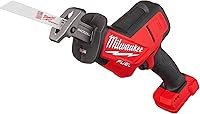
The Milwaukee 2719-20 M18 FUEL Hackzall suits buyers who want a compact Milwaukee saw for restricted access. It belongs to Milwaukee's separate Hackzall line and uses a one-handed design.
Its brushless motor, 7/8 in stroke, and pivoting shoe make it a useful model to compare for repair and removal jobs. The shoe helps maintain contact as the cutting angle changes.
Choose it when positioning the tool around an obstacle matters more than having a full-size body to grip. Skip it if most of your work offers ample room and you prefer a conventional two-handed layout.
It's a bare tool, so include compatible power equipment in your buying decision. Our Hackzall vs Sawzall comparison looks more closely at choosing between the Milwaukee lines.
Who should choose the DeWalt Atomic instead?
The DeWalt DCS369B suits buyers who want a compact one-handed saw, especially those already using compatible DeWalt batteries. It measures 12.5 in front to back, which helps you judge whether the body will fit your workspace.
The brushless saw has a variable-speed trigger, pivoting shoe, LED, and tool-free blade release. Trigger control is useful when starting a cut carefully before increasing speed.
It includes 2 blades and a belt hook; the battery and charger are sold separately. Check that the included blades suit your material before relying on them for the first job.
Skip it if you need a clean, guided cut for visible joinery or sheet goods. Our DeWalt DCS369B review covers this model in more detail.
Who should buy the Milwaukee M18 FUEL Sawzall?
The Milwaukee M18 FUEL Sawzall suits buyers seeking a full-size cordless reciprocating saw for rough cutting and removal work. It's a sensible candidate when you have room to hold and position a larger tool.
This brushless model has a lever-actuated blade clamp, built-in LED, and metal-reinforced battery connection. Those features address blade changes, visibility, and battery retention.
The package is bare tool only, with no battery or charger. Existing compatible M18 equipment makes it easier to add this saw without starting another battery system.
Skip this format when a larger body prevents you from reaching the cut while keeping a stable stance. Also choose another tool when cut accuracy matters more than removing material quickly.
For specific jobs, read whether a reciprocating saw can cut metal or how to prune trees with a reciprocating saw. Blade choice and work support change with the material.
What should you check before buying either type?
Check access, power equipment, and blade needs before comparing smaller convenience features. A saw that fits your battery system but can't reach the work is still the wrong choice.
Measure the usable space around the cut, including room behind the material. Allow for the blade's full travel rather than measuring only the saw body.
For cordless tools, confirm the exact battery family and charger compatibility. Compare the complete setup you need, including a suitable blade, rather than treating a bare tool as a ready-to-use kit.
Cordless power helps when moving between cuts or working away from an outlet. For repeated work near reliable power, our corded reciprocating saw guide offers another route to compare.
Finally, consider the controls you will use often. A blade release you can reach easily and a trigger you can control with your working grip matter more than the name printed on the housing.
Do Sawzalls need different blades?
Choose blades by compatibility, material, and length, rather than by the Sawzall name. Many reciprocating saws use a common blade-shank style, but your model's manual is the final guide.
Use wood blades for suitable wood cuts, metal blades for metal, and blades intended for embedded nails when cutting nail-containing timber. Don't assume a coarse wood blade can handle every hidden fastener.
For thin metal, select a tooth pitch that keeps several teeth engaged in the material. Teeth that are too coarse can catch and shake thin stock instead of cutting steadily.
Blade length must clear the work throughout the stroke. An unnecessarily long blade can flex or strike something behind the cut, while a short one can catch its tip inside the material.
Disconnect power before fitting a blade, then confirm it is seated and locked as the manual directs. Our reciprocating saw blade-change guide explains the process.
How should you set up and use a reciprocating saw?
Secure the material, check the blade path, and keep the shoe against the work where the cut allows. These steps reduce movement and help you control the tool.
Before cutting walls or enclosed spaces, identify wiring, pipes, and other hidden services. Plan where the blade tip will travel, including beyond the visible surface.
Wear eye protection and suitable hearing protection. Support the work so the offcut won't fall onto you or close the cut around the blade.
Start with controlled trigger pressure to establish the cut. Increase speed as appropriate for the material and let the blade cut without forcing the tool forward.
Keep your stance stable and your hands away from the blade path. Stop if the blade binds, the work shifts, or you lose shoe contact and control.
Release the trigger and wait for the blade to stop before setting the saw down. Our guide to using a reciprocating saw covers setup and cutting technique in more detail.
Which mistakes cause trouble, and how do you care for the saw?
Avoid forcing a dull blade, cutting unsupported material, and putting the saw away with packed debris. These habits make control harder and can turn a simple cut into a struggle.
Replace a dull, bent, or damaged blade instead of pressing harder. Heavy feed pressure can increase blade flex and leave a rougher, less controlled cut.
Don't pull a moving blade out of a binding cut. Release the trigger, wait for it to stop, disconnect power, and free the blade carefully.
After use, remove the battery or unplug the tool before cleaning around the clamp. Let the blade cool, clear loose debris, and follow the manual for cleaning and any lubrication.
Keep vents clear and store the saw dry with the blade protected or removed. An LED helps you see the immediate cutting area, but it doesn't reveal hidden hazards behind the work.
Which tool should you choose for your next project?
For a reciprocating saw vs Sawzall decision, choose the cutting format first and the brand second. Buy for your most common work rather than an occasional awkward cut.
Choose the M18 FUEL Sawzall for a full-size cordless layout, the 2719-20 Hackzall for compact Milwaukee access, or the DCS369B Atomic for a compact DeWalt option.
If you need curves or cleaner cut lines, start with our reciprocating saw vs jigsaw guide. For short, controlled cuts during repairs, compare a reciprocating saw with an oscillating multi-tool.
Before ordering, identify your material, measure the working space, and choose a compatible blade. Use the complete reciprocating saw guide to check that this tool category suits the job.
Frequently asked questions
Is Sawzall a generic name for a reciprocating saw?
Sawzall is Milwaukee's brand name for its Sawzall line; reciprocating saw is the general tool name. People often use Sawzall casually for the whole category, but use the actual brand and model when looking for manuals, batteries, replacement parts, or blade-fitting instructions.
Is a Hackzall the same as a Sawzall?
A Hackzall and a Sawzall are both reciprocating saws, but they belong to separate Milwaukee lines. The Hackzall's one-handed design suits work where access matters; choose between them by the space around the cut, the required grip, and the kind of work you expect to repeat.
Can you use the same blades in a Sawzall and a reciprocating saw?
Many reciprocating saws share a common blade-shank style, but confirm compatibility in your model's manual before fitting a blade. Match the blade to the material and choose enough length to clear the work throughout the stroke; remove the battery or unplug the tool before opening the clamp.
What should you call a reciprocating saw from another brand?
Call it a reciprocating saw, then add the brand and model when you need specific advice. For example, DeWalt DCS369B identifies a particular tool far more clearly than Sawzall; that detail helps you find the correct manual, compatible power equipment, and instructions for its controls.