Reciprocating Saw vs Oscillating Multi-Tool: Which Is Better? (November 2026)
For reciprocating saw vs oscillating tool, choose a reciprocating saw for bulky demolition cuts and an oscillating multi-tool for short, controlled cuts near finished surfaces. Check blade clearance, material and battery compatibility before buying.
On this page (10 sections)
- Reciprocating saw vs oscillating tool: what is the difference?
- Which tool cuts faster?
- Which tool fits common repair jobs?
- Which tool is better for tight spaces and flush cuts?
- Which tool gives a cleaner cut?
- What materials and blades should you choose?
- What should you check before buying these cordless tools?
- How should you set up and care for either tool?
- What common mistakes waste blades or damage the work?
- Which should you choose for your next job?
Choose a reciprocating saw for bulky demolition cuts and an oscillating multi-tool for short, controlled cuts near finished surfaces. The reciprocating saw vs oscillating tool decision depends on what you need to remove and what needs to stay intact.
Cutting out an old wood frame calls for a different approach than trimming a door casing for new flooring. The first job rewards blade reach and speed; the second rewards a small cutting area and careful depth control.
For the wider tool picture, start with our complete reciprocating saw and multi-tool guide. The options below show how each tool fits real repair and removal work.

Reciprocating saw vs oscillating tool: what is the difference?
A reciprocating saw moves a blade back and forth in a straight line, while an oscillating tool swings an accessory through a small arc. That difference shapes their reach, cutting pace and control.
The reciprocating saw's projecting blade reaches through thicker sections and into gaps. It needs space beyond the material because its tip continues moving throughout the stroke.
An oscillating blade works over a smaller area, making it useful for shallow plunge cuts and local trimming. Its short motion also supports sanding, scraping and grout removal when you fit an accessory made for that task.
Reciprocating saw vs oscillating tool: which cut matters most?
Choose by the hardest recurring cut, rather than the number of jobs printed on an accessory package. A tool that handles your main task well is more useful than one that can only manage it slowly.
If your projects involve removing studs, cutting old pipe or breaking down wood, favor a reciprocating saw. If they involve fitting flooring, repairing trim or opening small sections of drywall, favor an oscillating tool.
Neither is the first choice for long, straight cuts in visible panels. For that work, a guided circular saw, track saw or another suitable finish-cutting tool may fit better.
Which tool cuts faster?
A reciprocating saw is generally faster through bulky material, while an oscillating tool can finish a small repair sooner by reducing awkward setup and cleanup. Cutting speed matters only when the tool can reach the cut safely.
Don't compare strokes per minute with oscillations per minute as if they measure the same work. Blade travel, tooth design, material thickness and pressure all affect progress.
A fresh blade suited to the material can matter more than a higher speed setting. If cutting slows suddenly, stop and check for worn teeth, trapped waste or an unexpected material change.
When should you choose a reciprocating saw?
Choose a reciprocating saw when the removed piece can have a rough edge and you have clearance for the blade. It suits remodelers, demolition work and homeowners facing repeated removal jobs.
The DeWalt 20V MAX Recip Saw combines a 1-1/8 in stroke with a variable speed trigger reaching 3,000 strokes per minute. Its 4-position, tool-free clamp gives you blade-position choices, including flush-cutting setups.
Its pivoting adjustable shoe helps brace the saw against the work and control cutting depth. That support matters because an unsupported blade can chatter, flex or snag as you push.
Skip this model if your main work is delicate trim repair or shallow cuts beside surfaces you must preserve. Its blade-position options don't remove the need for clearance or turn it into a finish saw.
Our reciprocating saw uses guide explains more removal tasks, while how to use a reciprocating saw covers the working technique.
When should you choose an oscillating tool?
Choose an oscillating tool for short cuts, edge repairs and accessory work in a small area. It suits flooring installers, trim repair and homeowners who need one tool for several local fixes.
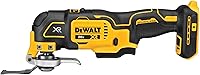
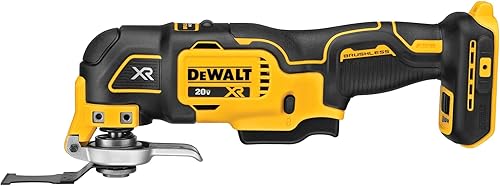
The DeWalt DCS356B has a 3-speed selector and variable speed trigger, giving you both a speed range and control within that range. Its Quick-Change system allows accessory swaps without wrenches, and its LED lights the work surface.
Pick it if you often switch between short wood cuts and other accessory tasks. Skip it as your main saw for dismantling thick framing or making repeated full-width cuts through larger material.
The Makita XMT03Z suits buyers who already have compatible Makita 18V LXT batteries with a Star symbol. It uses a 6,000 to 20,000 OPM dial, soft start and a slide switch with lock-on, a useful arrangement for sustained sanding or scraping.
Choose the Makita if you prefer setting a speed and using a slide switch. Choose the DeWalt if you want trigger-based adjustment during a cut, and skip either if your real need is bulk removal.
See our oscillating multi-tool uses for accessory jobs and our guide to using an oscillating multi-tool for technique.
Which tool fits common repair jobs?
Use a reciprocating saw for removing larger pieces and an oscillating tool for working around edges you need to keep. The examples below show where that distinction changes the choice.
| Job | Better starting choice | What to check first |
|---|---|---|
| Removing old wood framing | Reciprocating saw | Structural role, hidden services and blade clearance |
| Cutting accessible pipe during removal | Reciprocating saw | Pipe contents, support and blade material |
| Undercutting door casing for flooring | Oscillating tool | Finished floor height and nearby fasteners |
| Making a small drywall opening | Oscillating tool | Wiring, plumbing and required depth |
| Removing grout along a short joint | Oscillating tool | Accessory width and tile edges |
| Scraping hardened adhesive | Oscillating tool | Scraper suitability and surface damage |
| Making a long, straight furniture cut | Another saw | Required finish and a suitable guide |
For casing work, use a flooring offcut with the planned underlayment as a height reference. Support the blade flat against that reference without cutting into the finished flooring.
A grout accessory must fit within the joint without rubbing the tile edges. For the setup and removal sequence, follow our oscillating tool grout removal guide.
Which tool is better for tight spaces and flush cuts?
An oscillating tool usually offers better control for short cuts beside a surface, but body clearance matters as much as blade size. Check whether your hand and tool can stay in a stable position throughout the cut.
Accessory angle can help an oscillating tool reach a corner, where the attachment system allows it. Rotate the accessory only with the battery removed, then check that it seats and locks correctly.
A reciprocating saw may reach farther into an open gap, but reach alone isn't enough. The shoe needs support, and the blade must remain clear of hidden objects through its full movement.
Both tool types can make flush cuts with suitable blades. Protect the adjacent surface with a suitable sacrificial guard where possible, and don't assume a flush-cut blade leaves paint or flooring unmarked.
If the tool body forces your wrist into a strained position, change the setup. A cut that starts comfortably can become hard to control as the blade moves deeper.
Which tool gives a cleaner cut?
An oscillating tool usually gives more control over a short visible cut, though neither tool guarantees a finished edge. Blade sharpness, tooth pattern and steady support determine how much cleanup remains.
Mark the line clearly and make a shallow starting groove before cutting deeper. On a visible edge, try the blade on matching scrap first to judge splintering and the width of the cut.
Keep pressure light enough for the teeth to work. Pushing harder can make a reciprocating blade wander or cause an oscillating blade to overheat without making useful progress.
For a long curve or a shaped cut in sheet material, a jigsaw may be the better choice. Our reciprocating saw vs jigsaw comparison explains that difference.
What materials and blades should you choose?
Match the blade to the material and cut, then check that it fits the tool. Wood blades, metal blades, scrapers and grout accessories do different jobs even when their attachment points look similar.
For a reciprocating saw, choose a blade long enough to stay through the work throughout the stroke. Avoid unnecessary extra length, which adds flex and puts more blade beyond your view.
Coarser teeth generally suit fast wood removal, while finer teeth suit thinner metal sections. For mixed wood and nails, choose a blade designed for embedded metal rather than pushing a wood-only blade through fasteners.
Our guide to reciprocating saw blades for metal work covers that choice in more detail. Confirm that pipe is isolated, drained and safe to cut before starting.
For oscillating tools, choose blade width by the opening and edge you need. A narrow blade helps with a small cutout; a wider one can help follow a straight reference on an accessible surface.
Drywall, tile and grout create dust that needs material-appropriate controls. Identify older coatings and building materials before disturbing them, and use the protective equipment required for the work.
What should you check before buying these cordless tools?
Check battery compatibility, included accessories and your working position before choosing a model. All 3 tools here are sold without a battery or charger, so a bare tool only makes sense if you account for those items.
Owning a compatible battery can make one choice simpler, but it shouldn't override the job. Buying a reciprocating saw because you have its battery won't make it suitable for careful casing cuts.
The DeWalt multi-tool includes 2 wood cutting blades and a universal accessory adapter. The Makita includes a plunge blade and adapters, but either tool may need additional accessories for your planned material.
“Universal” doesn't mean every attachment fits. Check the exact accessory connection, required adapter and permitted use before ordering a pack of blades.
For longer tasks, consider whether you prefer a trigger or a lock-on slide switch. Also leave room for the installed battery when judging access under cabinets or between framing.
How should you set up and care for either tool?
Start with a secured workpiece, a clear blade path and the correct accessory. Remove the battery before fitting, adjusting or checking a blade.
Use this setup order:
- Identify the material and inspect both sides of the cut where possible.
- Mark the line and the maximum depth you need.
- Support the work and the offcut so neither can trap the blade.
- Fit the accessory fully, following the manual's locking procedure.
- Check clearance, grip and body position before reconnecting the battery.
- Start slowly, establish the cut and increase speed as the task allows.
With a reciprocating saw, keep the shoe against the work when the cut permits. With an oscillating tool, keep the accessory aligned and avoid twisting it sideways inside a narrow cut.
After use, disconnect the battery and let the blade cool. Clear chips and dust from vents and attachment areas with the method recommended in the manual.
Replace blades with chipped or worn teeth instead of pressing harder to compensate. Store sharp accessories where they cannot knock together or cut you when you reach into the case.
What common mistakes waste blades or damage the work?
The biggest mistakes are forcing the cut, using the wrong accessory and ignoring clearance. Stop when progress changes instead of trying to power through resistance.
- Starting at full speed: Begin with enough control to establish the line, then adjust for the material.
- Letting the offcut drop early: Support it so its weight doesn't close the cut and pinch the blade.
- Using excess blade length: Extra reach can strike something behind the work and make the blade harder to control.
- Leaning on an oscillating tool: Heavy pressure adds heat and can damage teeth or the work surface.
- Treating every attachment as compatible: An accessory must seat securely with the correct connection or adapter.
- Cutting blind near services: Locate wiring and plumbing before choosing a cutting depth.
Don't touch a blade immediately after it stops. Friction can leave it hot even after a short cut, and a jammed accessory should only be freed after disconnecting the battery.
Which should you choose for your next job?
For the reciprocating saw vs oscillating tool decision, buy for the work that dominates your project. Choose the DeWalt reciprocating saw for rough removal, the DeWalt multi-tool for trigger-controlled repairs, or the Makita for detail work within a compatible battery setup.
If you're stripping a room and fitting new trim afterward, both tool types can earn a place. Buy the one needed for the next stage first, then add the other when its jobs justify it.
If small repairs are your main goal, compare our best cordless oscillating multi-tools before choosing. Start with the right tool type, then spend your attention on blade fit, safe access and the edge you need to leave behind.
Frequently asked questions
Is a reciprocating saw better than an oscillating tool?
A reciprocating saw is better for rough removal and bulky cuts, while an oscillating tool is better for short cuts near finished surfaces. Choose by the work you need to complete most often, then check blade access and clearance rather than comparing their speed numbers.
Can an oscillating tool replace a reciprocating saw?
An oscillating tool can replace a reciprocating saw for some small repair cuts, but it is a poor substitute for repeated cuts through bulky wood or pipe. Its short cutting action favors local work, so a long demolition cut can take much longer and wear through accessories.
Can a reciprocating saw make a flush cut?
Yes, a reciprocating saw can make a flush cut with a suitable blade and enough clearance. The DeWalt 20V MAX Recip Saw has a 4-position clamp that supports this work, but you must still protect nearby surfaces, support the shoe and check the blade's full travel.
Which tool is better for cutting drywall?
An oscillating multi-tool is usually the better choice for a small drywall opening because you can work along a short marked line. Locate wiring and plumbing before cutting, use a suitable blade and control depth carefully; a shallow blade position does not prove that hidden services are clear.
Can these tools use the same blades?
No, reciprocating saw blades and oscillating tool accessories use different attachment systems and cutting motions. Buy blades made for your exact tool, material and task, and check whether an adapter is needed; an oscillating tool's universal adapter does not mean every accessory will fit or work correctly.