DeWalt DCS369B Atomic Reciprocating Saw Review: Worth It? (November 2026)
The DeWalt DCS369B suits tight-space cutting if you want a one-handed saw and already use compatible DeWalt 20V MAX batteries. Choose a larger model if demanding demolition makes up most of your work.
On this page (10 sections)
- What does the DeWalt DCS369B do best?
- Which DCS369B features matter during a cut?
- Who should buy the Atomic, and who should skip it?
- How does the DCS369B compare with the DCS367B?
- Is the DCS369B the right choice for demanding work?
- What should you check before buying batteries and blades?
- How should you set up the DCS369B for a cut?
- Which common mistakes cause rough cuts or extra wear?
- What are the best alternatives to the DCS369B?
- Should you choose the DeWalt DCS369B?
The DeWalt DCS369B is a good fit for tight-space repair cuts, especially if you already use compatible DeWalt 20V MAX batteries. Choose it for access and control when a larger reciprocating saw would be awkward to position.
It suits a repair kit better than a shopping list built around heavy demolition. Before buying, consider the room around your usual cuts, the blades you'll need and the battery equipment you already have.
What does the DeWalt DCS369B do best?
The DCS369B works best where getting the saw into position matters more than choosing a larger demolition tool. Think of short repair cuts around framing, awkward corners and other crowded work areas with a clear blade path.
DeWalt DCS369B Atomic Recip Saw: Best for tight-space repairs

- 12.5 in front-to-back length
- Brushless motor
- Pivoting shoe
- Variable-speed trigger
- LED
Choose this compact saw for repair cuts where a larger tool is awkward to position. It makes the most sense if you already have compatible DeWalt batteries and a charger.
Pros
- Short body for crowded work areas
- Variable-speed trigger for controlled starts
- Pivoting shoe supports contact with the work
- Tool-free blade release
Cons
- Battery and charger sold separately
- Less suited to buyers whose main work is demanding demolition
A compact saw can help you approach a cut without stretching your arm around a bulky tool. That matters when you need to keep the shoe against the material while watching where the blade will exit.
It also makes sense as a second saw for someone whose larger recip saw handles open demolition work. Buy it to solve an access problem, rather than expecting one compact tool to suit every cutting task.
When is the DeWalt DCS369B's one-handed design useful?
The one-handed layout helps when you need to position the tool in a confined area. It does not make your free hand a work clamp, so secure loose material before bringing the saw into the cut.
Check your stance as well as the opening around the tool. If reaching the work forces you off balance or hides the blade tip, change your setup before starting.
For outdoor jobs, our guide to using a reciprocating saw for pruning explains the different support and blade needs. Keep branch-cutting plans separate from general demolition blade choices.
Which DCS369B features matter during a cut?
The pivoting shoe and variable-speed trigger deserve as much attention as the compact body. They help you maintain contact with the work and ease into a cut before increasing speed.
| Detail | DeWalt DCS369B |
|---|---|
| Tool format | One-handed cordless reciprocating saw |
| Front-to-back length | 12.5 in |
| Maximum speed | 2,800 SPM |
| Motor | Brushless |
| Shoe | Pivoting |
| Speed control | Variable-speed trigger |
| Blade changes | Tool-free blade release |
| Work light | LED |
| Included | Saw, 2 blades and belt hook |
| Battery and charger | Sold separately |
The shoe gives the saw a contact point against the workpiece. Keeping it supported helps limit the movement that occurs when a reciprocating blade pulls at unsupported material.
Start with gentle trigger pressure so the teeth can establish a path. Increase speed to suit the blade and material instead of squeezing fully before the blade touches the work.
The LED helps illuminate dark areas, but it can't show what's behind a board or wall. Add separate lighting if you can't see the cut line, surrounding obstacles or where the blade will travel.
Who should buy the Atomic, and who should skip it?
Buy the Atomic if repair work and access drive your choice. It's especially sensible for a DeWalt battery user who wants a compact saw for occasional cuts between other jobs.
Skip it as your first choice if demanding demolition fills most of your day. A saw designed around heavier work is a better starting point than choosing a smaller body simply because it fits the toolbox.
Also skip a reciprocating saw if your main goal is a neat, visible finish cut. The blade action suits rough cutting, while trim work and short, controlled cuts may call for a different tool.
Our reciprocating saw vs oscillating multi-tool comparison helps with that choice. Decide what kind of cut you need before choosing the battery platform or tool size.
How does the DCS369B compare with the DCS367B?
DeWalt says the DCS369B is 37% lighter than the DCS367, tool only. That is a useful comparison if reducing the weight of the bare tool is a priority.
Your working setup also includes a battery and blade. Consider the complete saw you'll hold, particularly for cuts that require reaching or holding the tool away from your body.
Weight alone shouldn't settle the choice. Check whether the tool's shape lets you maintain a secure grip and shoe contact throughout the planned cut.
Is the DCS369B the right choice for demanding work?
Choose the DCS369B for compact access, and compare the DCS384B when repeated demolition cuts define the job. DeWalt designs the larger model for demanding demolition and cutting applications.
Don't use maximum stroke rate as a shortcut for cutting speed. Blade condition, tooth pattern, material thickness and support all affect how a cut progresses.
For a mixed workload, identify the task that takes most of your time. A compact saw makes more sense when awkward access is common; a demolition-focused model deserves priority when most cuts happen in open space.
The reciprocating saw guide explains the broader tool choices. Our best DeWalt reciprocating saws guide helps narrow the options within the same battery family.
What should you check before buying batteries and blades?
Check battery compatibility and blade needs before ordering. The DCS369B comes without a battery or charger, so a bare-tool comparison only makes sense if you already have suitable equipment.
If you're starting a cordless kit, compare the complete setup rather than the saw alone. Think about which platform also supports the other tools you expect to need.
The included blades are a starting point, not a reason to skip blade selection. Match each blade to the material, including hidden nails or screws that could be present in reclaimed wood.
Choose enough blade length to clear the far side of the material throughout the stroke. Excess length can make a blade harder to control, while a blade that's too short can strike the far edge and bend.
For metal, tooth choice and cutting speed need separate attention. Read how to cut metal with a reciprocating saw before treating a metal cut like a wood cut.
How should you set up the DCS369B for a cut?
Set up by securing the material and checking the full blade path. Remove the battery while fitting the blade, inspecting the clamp or making adjustments near the cutting end.
Follow the manual to install a compatible blade and confirm it is locked securely. Our guide to changing a reciprocating saw blade covers the basic sequence.
Clamp the work so it can't shift, and support the section being removed. Plan the cut so the closing gap won't pinch the blade or leave the offcut falling toward you.
Check behind the work for wiring, pipes, fasteners and other hazards. Don't make a blind cut into a wall or enclosure without identifying and safely addressing what lies inside.
Wear eye protection and use hearing and dust protection suited to the task. Once the work is ready, follow the manual's grip instructions, bring the shoe into contact and begin slowly.
Let the teeth cut with steady pressure. If the saw binds, release the trigger and wait for the blade to stop before removing the battery and correcting the cause.
For a fuller walkthrough, how to use a reciprocating saw covers work support, starting cuts and blade control.
Which common mistakes cause rough cuts or extra wear?
The most common mistakes are using the wrong blade, losing shoe contact and forcing the cut. Correct those before assuming you need a different saw.
A dull blade often leads you to push harder. Replace a worn or damaged blade instead of adding pressure that can increase heat, bending and loss of control.
Don't let the workpiece bounce while cutting. Improve the clamps or supports, and keep the shoe against the material where the cut allows.
Avoid twisting the tool to steer a straight blade around a sharp turn. A reciprocating saw is a rough-cutting tool, so plan a suitable cut path rather than forcing the blade sideways.
Keep your free hand clear even when cutting a small offcut. The tool's one-handed layout doesn't make it safe to hold material beside the moving blade.
After work, remove the battery and let the blade cool before handling it. Clear debris around the blade clamp and ventilation openings as the manual directs, then store the tool dry with the blade protected.
What are the best alternatives to the DCS369B?
Choose the Hackzall for a similar one-handed role on M18, the DCS384B for DeWalt demolition work, or the Sawzall for a full-size Milwaukee setup. Battery ownership should narrow the choice before small feature differences do.
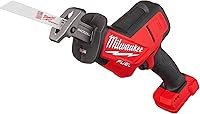
Milwaukee 2719-20 M18 FUEL Hackzall: Best for M18 repair crews

- One-handed design
- Brushless motor
- 7/8 in stroke length
- Pivoting shoe
The closest alternative for repair work if you already use compatible Milwaukee M18 batteries. Its one-handed layout and pivoting shoe suit jobs where positioning the saw matters.
Pros
- One-handed layout for confined cuts
- Brushless motor
- Pivoting shoe
- Overload protection
Cons
- Bare tool only
- Adds another battery platform for DeWalt-only buyers
The Milwaukee 2719-20 M18 FUEL Hackzall is the closest alternative here for repair work. Its one-handed design, brushless motor, pivoting shoe and 7/8 in stroke length make it worth considering if you already use compatible M18 batteries.
Milwaukee's REDLINK Plus system includes overload protection. That is a useful feature, but you should still stop and correct a bound blade rather than keep pressing the trigger.
Choose it if staying within M18 avoids buying another battery system. Skip it if you already have suitable DeWalt equipment and the Atomic's compact format meets your needs.
DeWalt DCS384B XR Recip Saw: Best for DeWalt demolition crews

- 1-1/8 in stroke length
- Brushless motor
- Variable-speed trigger
- Pivoting shoe
- LED
Choose this larger DeWalt saw when demanding demolition is your main task. Its longer body needs more working room than the Atomic.
Pros
- Designed for demanding demolition
- Keyless lever-action blade clamp
- Counterbalance mechanism designed to limit vibration
Cons
- 19.3 in body needs more room than the DCS369B
- Battery and charger sold separately
The DeWalt DCS384B XR is the better starting point here for buyers focused on demanding demolition. It has a 1-1/8 in stroke length, a maximum no-load speed of 3,000 SPM and a counterbalance mechanism designed to limit vibration.
Its 19.3 in body needs more working room than the Atomic. That trade makes sense for open demolition cuts, but less sense if your main reason for shopping is a crowded repair area.
Choose it to keep heavier cutting within the DeWalt platform. Skip it when access is the deciding factor, and remember that its battery and charger are separate.
Milwaukee M18 FUEL Sawzall: Best for M18 demolition crews

- Brushless motor
- Lever-actuated blade clamp
- Built-in LED
A full-size option for M18 users choosing a saw for general demolition work. Its lever-actuated blade clamp helps with blade changes, and Milwaukee says the reinforced battery connection improves retention.
Pros
- Lever-actuated blade clamp
- Built-in LED
- Metal-reinforced battery connection
Cons
- 6.8 lb tool weight
- Battery and charger sold separately
The Milwaukee M18 FUEL Sawzall suits M18 buyers choosing a full-size saw for general demolition. Its lever-actuated blade clamp helps with blade changes, and the built-in LED lights the work surface.
Milwaukee says the metal-reinforced battery connection improves durability and battery retention. That feature is relevant to a working tool kit, but it shouldn't outweigh the saw's fit for your cuts.
At 6.8 lb before adding your battery, weight deserves attention for reaching tasks. Skip this option if a compact repair saw is what you need, and account for the separate battery and charger.
Should you choose the DeWalt DCS369B?
Choose the DeWalt DCS369B for confined repair cuts when you have compatible batteries and can secure the work properly. Before ordering, picture one typical cut and confirm room for the saw, battery, blade travel and your grip.
Choose the Hackzall if that same work belongs in an existing M18 kit. Move to the DCS384B for DeWalt demolition work, or the Sawzall if a full-size Milwaukee saw fits your tasks.
If you're still deciding on a battery system, use our cordless reciprocating saw guide to compare the complete setup. Buy the format that fits your recurring cuts, then choose the blades for the material.
Frequently asked questions
Is the DeWalt DCS369B a one-handed saw?
Yes, the DeWalt DCS369B has a one-handed design suited to cuts where a larger saw is awkward to position. Secure the material before starting, keep your free hand away from the blade path, and use the grip positions required by the manual throughout the cut.
Does the DeWalt DCS369B come with a battery?
No, the DCS369B is a tool-only model, with the battery and charger sold separately. It uses the DeWalt 20V MAX platform, so confirm compatibility with your existing equipment before ordering; if you're starting from scratch, include both items when comparing the complete setup with other saws.
What is the difference between the DCS369B and DCS367B?
DeWalt says the DCS369B is 37% lighter than the DCS367 when comparing the tools without batteries, and the DCS369B also has a compact, one-handed layout. Use that weight comparison as one buying factor, then consider the fitted battery, working space and grip needed for your usual cuts.
What blades fit the DeWalt DCS369B?
Use reciprocating-saw blades confirmed as compatible with the DCS369B, then choose the tooth pattern and length for your material. Check the manual for blade requirements rather than choosing by length alone; remove the battery before installation, confirm the blade locks securely, and allow used blades to cool before handling.