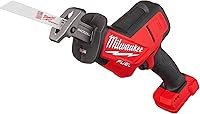
Milwaukee 2719-20 Hackzall Review: Worth It? (November 2026)
The Milwaukee 2719-20 M18 FUEL Hackzall suits M18 users who need a compact, one-handed saw for cuts in tight spaces. Choose it for access and positioning, and budget for a compatible battery and charger if you need them.
On this page (11 sections)
- What does the Milwaukee 2719-20 offer?
- Who should buy this Hackzall, and who should skip it?
- How does it compare with the DeWalt DCS369B?
- When does the Milwaukee M18 FUEL Sawzall make sense?
- What should you check before buying the 2719-20?
- Which blade should you use with the Hackzall?
- Is the 2719-20 suitable for cutting metal?
- How should you set up and start a cut?
- What common mistakes cause poor cuts?
- How should you care for the saw after use?
- Is the Milwaukee 2719-20 the right choice for your work?
The Milwaukee 2719-20 M18 FUEL Hackzall is a good fit for M18 users who need a compact saw for rough cuts in cramped spaces. Buy it when positioning the tool is the main challenge, rather than expecting it to replace every saw in your kit.
Its one-handed format suits jobs around pipes, framing and other obstacles, provided you can secure the material and clear the blade path. For a broader Milwaukee comparison, start with the Milwaukee M18 FUEL Sawzall.
What does the Milwaukee 2719-20 offer?
The 2719-20 combines a one-handed design, a pivoting shoe and a brushless motor in an M18 cordless saw. Those features make it worth considering for maintenance and rough removal cuts where access matters more than a clean finished edge.
Milwaukee 2719-20 M18 FUEL Hackzall: Best for tight workspaces

- One-handed design
- 7/8 in stroke length
- Pivoting shoe
- Brushless motor
Choose this M18 Hackzall when limited access makes a compact saw useful. Its pivoting shoe helps you keep contact with the material while guiding the cut.
Pros
- One-handed format helps with positioning
- Pivoting shoe supports contact with the workpiece
- POWERSTATE brushless motor
- REDLINK Plus overload protection
Cons
- Battery and charger are separate
- Reciprocating action is a poor fit for fine finish cuts
The shoe rests against the workpiece while the blade moves through it. Its pivot lets it follow the contact angle, and Milwaukee says that supported contact helps reduce bucking and vibration.
Milwaukee's REDLINK Plus electronics provide overload protection and help manage performance. They don't replace sensible feed pressure: if the saw struggles, stop and check the blade, material and support rather than pushing harder.
What the Milwaukee 2719-20's 7/8 in stroke means
The 7/8 in stroke describes the blade's travel in one direction, not how thick a piece you can cut. Milwaukee says this stroke helps remove material with each pass.
Cutting depth depends on a suitable blade, clearance and the permitted uses in the manual. A longer blade can reach farther, but it can also flex more and strike something hidden behind the work.
Skip headline speed comparisons when they don't match your material and blade. A sharp blade made for the job is a better starting point than choosing a saw by one performance number.
Who should buy this Hackzall, and who should skip it?
Buy the Hackzall if you already use M18 batteries and often cut around obstacles. Its shape is especially relevant when a larger tool would make it hard to line up the blade or keep the shoe supported.
Think about your last few projects. If they involved short cuts in awkward positions, this format addresses a clear need; if they involved long, straight finish cuts, a different saw type belongs higher on your list.
The one-handed design describes how you can hold the tool. It doesn't mean your free hand should hold a loose offcut near the moving blade.
Skip it for cabinet edges, accurate curves or cuts where the finished surface must look neat. Reciprocating saws favor access and rough removal, while other saw types offer better guidance for precise work.
A small cut close to a finished surface may also suit an oscillating tool. Our reciprocating saw versus oscillating multi-tool guide explains that choice.
For an overview before committing to either type, use the reciprocating saw guide.
How does it compare with the DeWalt DCS369B?
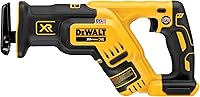
Choose the DeWalt DCS369B if you have compatible DeWalt batteries and want a compact alternative with an LED and variable-speed trigger. For an established M18 user, staying with the Hackzall can avoid adding another battery and charger setup.
DeWalt DCS369B Atomic Recip Saw: Best for DeWalt battery owners

- One-handed design
- Brushless motor
- LED work light
- Variable-speed trigger
A close alternative for buyers with compatible DeWalt batteries. Its LED and variable-speed trigger help when visibility and a controlled start matter.
Pros
- LED illuminates the work area
- Variable-speed trigger
- Tool-free blade release
- Includes 2 blades and a belt hook
Cons
- Battery and charger are separate
- Adds another battery platform for Milwaukee-only users
The DeWalt measures 12.5 in front to back and has a brushless motor, pivoting shoe and tool-free blade release. It includes 2 blades and a belt hook, with the battery and charger sold separately.
The trigger gives you control over speed as you start and continue a cut. The LED helps illuminate the work area, though you still need enough room and light to inspect what lies beyond the blade.
Check access with the whole cutting setup in mind. The body length alone doesn't account for the fitted battery, blade, your grip or the space needed to withdraw the saw.
Skip the DeWalt if it duplicates an M18 setup that already meets your needs. A second platform makes more sense when its controls or shape solve a recurring problem.
Read the DCS369B review for more detail. Our cordless reciprocating saw guide also explains how to compare battery systems and working positions.
When does the Milwaukee M18 FUEL Sawzall make sense?
Consider the Milwaukee M18 FUEL Sawzall for rough removal work where you have room to position and support the tool. The Hackzall remains the more relevant choice here when compact, one-handed positioning is your main reason for buying.
Milwaukee M18 FUEL Sawzall: Best for open demolition work

- Brushless motor
- Lever-actuated blade clamp
- Built-in LED
- Bare tool
Consider this Sawzall for rough removal jobs with room to position and support the saw. Its blade clamp and reinforced battery connection are useful features for that role.
Pros
- Lever-actuated blade clamp
- Built-in LED light
- Metal-reinforced battery connection
Cons
- Weighs 6.8 lb
- Battery and charger are separate
This Sawzall is model 2821-20, with a brushless motor, lever-actuated blade clamp and built-in LED. Its metal-reinforced battery connection is designed by Milwaukee to improve durability and battery retention.
It weighs 6.8 lb and comes without a battery or charger. Account for the fitted battery and the angle of the cut when deciding whether that weight suits your work.
Skip it if most cuts happen in cramped cavities or at positions where you cannot comfortably support the saw. Open access and secure footing matter more than choosing a larger format for occasional jobs.
The clamp is useful if you switch between wood and metal blades during removal work. It doesn't make one blade suitable for every material.
Use Hackzall vs Sawzall to compare the formats. For job ideas and limits, see what a reciprocating saw is used for.
What should you check before buying the 2719-20?
Check your battery setup, cutting position and blade needs before ordering. These decide whether the Hackzall will solve your problem and what else you need to begin.
Start with the power system. The 2719-20 is a bare tool, so you need a compatible M18 battery and charger; compare the complete setup if you don't already have them.
Next, look at the actual space around your regular cuts. Allow room for your hand, the battery, the full moving blade and a safe way to pull the tool out afterward.
Don't judge access only by whether the blade tip reaches the material. You also need to bring the shoe into contact and hold the saw without twisting your wrist into a strained position.
Plan for blades as consumables. A useful starter selection follows your work: clean wood, wood with embedded fasteners and metal call for blades suited to those tasks.
Finally, think about charging between jobs. If you need long work sessions, plan battery availability around your workload rather than assuming any cordless saw will run through the entire project.
Which blade should you use with the Hackzall?
Use a blade made for the material and its thickness, with enough length to clear the work throughout the stroke. Choosing by length alone can leave you with slow cuts, bent blades or damaged teeth.
For clean wood, use a wood-cutting blade. For removal work that may contain nails, choose a blade intended for embedded metal rather than assuming a basic wood blade can handle it.
Metal needs a suitable tooth pattern for the thickness being cut. Thin sections generally need finer teeth so several teeth remain engaged instead of catching at the edge.
Choose enough reach without adding needless length. An overly long blade can flex, wander and touch objects behind the workpiece.
Replace a blade that is bent, cracked or badly worn. If you need help with fitting and securing one, follow our reciprocating saw blade-change guide alongside the tool manual.
Is the 2719-20 suitable for cutting metal?
Yes, the 2719-20 can cut metal with a suitable blade and a secure setup. Its compact shape helps with access, but a loose pipe or unsupported section can still shake and bind.
Clamp the work so it cannot roll or shift, and support the section that will become the offcut. Arrange the cut so the closing gap won't trap the blade.
Keep the shoe supported and use steady pressure. If progress slows, check for worn teeth, binding or the wrong blade before increasing force.
For hollow sections, allow clearance beyond both walls. The blade tip must not strike the far side in a way that bends or jams it.
Our guide to cutting metal with a reciprocating saw covers material and blade choices. Don't cut pipes until you've identified their contents and safely isolated any connected service.
How should you set up and start a cut?
Start with secure work, a checked blade path and firm shoe contact. A short setup routine helps prevent the shifting and snagging that make a reciprocating saw hard to control.
- Inspect the area. Check behind the intended cut for wiring, pipes and surfaces the blade could strike.
- Secure the material. Clamp loose stock and support offcuts without placing hands near the blade path.
- Remove the battery. Fit the correct blade according to the manual, then confirm it is secure.
- Check clearance. Allow for the blade's full movement and the path of the falling offcut.
- Prepare yourself. Wear eye protection and use hearing or dust protection as the job requires.
- Position the saw. Establish stable footing, support the shoe and begin under control.
Let the teeth do the cutting. Excessive pressure can bend the blade, close the cut around it or make the tool harder to guide.
After finishing, release the trigger and wait for the blade to stop before setting the saw down. The blade and fresh metal edges may be hot or sharp.
The reciprocating saw use guide explains the basic technique in more detail.
What common mistakes cause poor cuts?
The most common problems come from the wrong blade, weak work support and forcing the cut. Correct those first when a saw chatters, wanders or makes little progress.
- Holding the shoe away from the work: This lets the material and blade move more freely, increasing chatter.
- Using a dull blade: Worn teeth encourage you to push harder while producing less useful cutting.
- Choosing excessive blade length: Extra reach can become unwanted flex and hidden contact behind the cut.
- Letting an offcut pinch the blade: Plan support so the gap stays open as the cut finishes.
- Treating overload protection as permission to force it: Stop and resolve a stall or bind before continuing.
Another mistake is using the saw simply because it fits into a gap. If you cannot see the cut, support the tool or check beyond the blade, change the approach.
How should you care for the saw after use?
Keep the blade area, vents and battery contacts clear of debris, following the manual's cleaning instructions. Remove the battery before cleaning or inspecting the tool.
Let the blade cool before handling it, then check for damage and packed debris around the clamp. Remove a damaged blade from service rather than saving it for a less demanding job.
Wipe down the housing and store the saw somewhere dry. Avoid directing water into the tool or applying oil to the clamp unless the manual calls for it.
Inspect the battery and its connection before the next use. A damaged pack or loose connection needs attention before you return to cutting.
Is the Milwaukee 2719-20 the right choice for your work?
Choose the Milwaukee 2719-20 if your recurring problem is getting an M18 saw into tight cutting positions. Before ordering, identify your first job, select its blade and confirm that you can support the shoe throughout the cut.
Pick the DeWalt DCS369B when its controls fit your needs and your battery setup favors DeWalt. Consider the Milwaukee M18 FUEL Sawzall for open removal work where its weight and format suit your working position.
If none matches your usual cuts, compare the best cordless reciprocating saws by job and battery platform before choosing.
Frequently asked questions
Is the Milwaukee 2719-20 a brushless saw?
Yes, the Milwaukee 2719-20 uses a POWERSTATE brushless motor and REDLINK Plus electronics; Milwaukee says the electronics help optimize performance and protect against overload. You still need a suitable blade, secure work support and steady pressure to keep the saw working properly.
Does the Milwaukee 2719-20 come with a battery?
No, the Milwaukee 2719-20 is a bare tool without a battery or charger; you'll need a compatible M18 battery and charger to use it. If you're starting a new cordless setup, include both in your buying plan rather than comparing the saw bodies alone.
What is the stroke length of the Milwaukee 2719-20?
The Milwaukee 2719-20 has a 7/8 in stroke, which is the distance the blade travels in one direction; stroke length is different from blade length and cutting depth. Choose a blade that clears the workpiece throughout its travel, with enough room behind the cut.
Should I choose the Hackzall or the Sawzall?
Choose the Hackzall when access and one-handed positioning drive the job; consider the Sawzall for rough removal work where you have room to support and guide the tool. Before buying, check the cutting position, blade clearance and battery setup rather than choosing by the tool name alone.