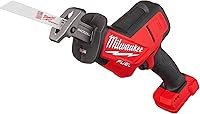
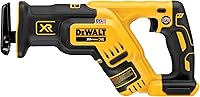
DeWalt Atomic vs Milwaukee Hackzall: Which Is Better? (November 2026)
For Milwaukee Hackzall vs DeWalt, choose the Atomic for tighter access and lighter handling, or the Hackzall if you already use M18 batteries. Choose the larger DCS384B for demanding demolition where there's room to work.
On this page (13 sections)
- Milwaukee Hackzall vs DeWalt Atomic: what is the main difference?
- Which saw fits cramped repair work?
- How do the controls and cutting features compare?
- Should your existing batteries decide the choice?
- Who should buy the DeWalt DCS369B Atomic?
- Who should choose the Milwaukee 2719-20 Hackzall?
- When is the larger DeWalt DCS384B a better fit?
- Which blade should you use for each job?
- How should you set up a one-handed reciprocating saw?
- How do you reduce chatter and avoid common mistakes?
- How should you care for the saw and blades?
- FAQ: Milwaukee Hackzall vs DeWalt Atomic
- Milwaukee Hackzall vs DeWalt: make the final choice
For Milwaukee Hackzall vs DeWalt, choose the Atomic for tighter access and lighter handling, or the Hackzall if you already use M18 batteries. The larger DeWalt DCS384B belongs on your shortlist when demanding demolition matters more than compact size.
The key is choosing for your usual cut: an awkward pipe repair, a short removal job or repeated demolition. A saw that fits the space and your battery setup is a better buy than one chosen for a single motor or stroke claim.


Milwaukee Hackzall vs DeWalt Atomic: what is the main difference?
The Atomic is shorter and lighter, while the Hackzall makes sense for buyers building around Milwaukee's M18 system. Both are brushless, one-handed cordless reciprocating saws with pivoting shoes.
The DCS369B measures 12.5 in front to back and weighs 3.13 lb without a battery. The Milwaukee 2719-20 measures 14 in long and weighs 1.8 kg, about 4 lb.
Those differences matter when you need to position the tool inside a cabinet or keep it raised for a short cut. They don't guarantee a cutting-speed winner, and the attached battery changes the working weight and balance.
For the broader tool family, see our guide to reciprocating saws and multi-tools. Our Hackzall vs Sawzall comparison explains when a one-handed Milwaukee makes more sense than a larger saw.
Which saw fits cramped repair work?
Start with the Atomic for restricted access, then check whether the entire cutting setup fits. Body length is only part of the clearance you need.
Your grip needs space behind the tool, and the blade needs a clear path through and beyond the material. A wall, cabinet back or second pipe can block the stroke even when the saw body fits.
Measure the approach angle before buying for one awkward job. You need to reach the cut while keeping the shoe against the work and your wrist in a steady position.
The Hackzall remains a sensible choice when it fits the opening and matches batteries you already use. Switching systems for a smaller body makes sense only if that difference solves an access problem you'll face often.
Neither saw is a good choice for delicate finish work where a rough edge would spoil the job. Use a tool suited to the cut quality you need.
How do the controls and cutting features compare?
The Atomic offers adjustable trigger speed and an LED, while the Hackzall adds Milwaukee's overload protection and counterbalance design. These features help with different parts of the job.
The Atomic runs at up to 2,800 SPM and has a tool-free blade release. Its trigger lets you start gently before increasing speed once the blade has a stable cut.
The Hackzall has a 7/8 in stroke, which describes blade travel on each cycle. Milwaukee's REDLINK Plus electronics protect against overload, overheating and over-discharge, while its counterbalance mechanism is designed to reduce vibration.
Don't mistake these features for permission to force either saw. A blade that stalls, bends or repeatedly catches calls for a check of the blade, support and cutting angle.
What matters in Milwaukee Hackzall vs DeWalt speed claims?
Blade choice and the material matter more than an isolated speed claim. No-load speed describes movement without a cutting load, so it can't tell you how quickly two saws will finish the same job.
Stroke length is also different from blade length. A longer blade can reach farther, while a longer stroke changes how far the teeth move during each cycle.
Choose for access and workload first. Then fit a blade suited to the material rather than trying to solve every cut with more trigger pressure.
Should your existing batteries decide the choice?
Stay with compatible batteries you already own unless the other saw solves a clear problem. Sharing a charger and spare packs makes a small repair saw easier to keep ready.
The Atomic uses DeWalt's 20V MAX system, while this Hackzall uses Milwaukee M18 batteries. Confirm compatibility with the exact tool model rather than relying on brand color or a voltage number.
Both are sold without a battery and charger. If you own neither system, compare the complete setup and the other cordless tools you expect to need.
Also plan for charging during your work. A single pack may be convenient for occasional repairs, while repeated cuts require more thought about spare power and charging access.
Don't choose a battery only for capacity. On a compact saw, the fitted pack also affects clearance, balance and how comfortably you can hold the tool.
Who should buy the DeWalt DCS369B Atomic?
Buy the Atomic for short repair cuts, cramped access and lighter handling. It suits a DeWalt user who wants a compact saw for removal tasks rather than a larger demolition tool for every job.
Its LED helps illuminate dark work areas, though you should still light the whole workspace. You need to see where the blade will exit, not just where the teeth enter.
The tool includes 2 blades and a belt hook. Choose additional blades around your actual materials instead of assuming the included blades cover every task.
Skip the Atomic if your main work is sustained demolition with plenty of room for a larger saw. Also skip it if the cut requires a clean, precise finish that a reciprocating saw isn't suited to deliver.
Our DeWalt DCS369B review gives a closer model-specific breakdown.
Who should choose the Milwaukee 2719-20 Hackzall?
Buy the Hackzall for compact repair work within an existing M18 setup. It's a direct alternative to the Atomic when its body fits your workspace and you value sharing batteries with other tools.
The pivoting shoe helps maintain contact as the cutting angle changes. That contact matters during pipe removal and other cuts where an unsupported blade can chatter.
Its one-handed layout can make positioning easier, but it doesn't make every awkward reach safe. Move the work or change your position if you can't keep the blade path clear.
Skip this model if the Atomic's smaller body is what makes your cut possible. Starting an M18 setup also needs a stronger reason than choosing a brand name when you already have suitable DeWalt batteries.
Read our Milwaukee 2719-20 review for more detail on this model.
When is the larger DeWalt DCS384B a better fit?
Choose the DCS384B for demanding demolition where you have room to position a larger saw. It serves a different priority from the compact pair: repeated cutting rather than minimum body size.
It has a 1-1/8 in stroke and a variable-speed trigger offering up to 3,000 SPM no-load. A counterbalance mechanism is designed to limit vibration, and the keyless lever-action clamp simplifies blade changes.
At 19.3 in long and 4.5 lb, it needs more working space than the Atomic. It also has an onboard LED and includes a wood-cutting blade.
Skip it for cabinet access or occasional small cuts where the extra body length becomes a burden. A longer stroke isn't useful if you can't place the shoe properly or keep the moving blade clear of nearby surfaces.
Which blade should you use for each job?
Match the blade to the material and its thickness before adjusting your technique. The wrong teeth can turn a manageable cut into chatter, slow progress or a bent blade.
Use a wood blade for clean lumber and a blade intended for embedded nails when cutting demolition wood. For metal, choose teeth suited to the wall thickness so several teeth stay engaged rather than catching an edge.
A blade should be long enough to remain beyond the far side of the material throughout its stroke. Excess length adds flex and gives the tip more opportunity to strike something behind the cut.
Don't confuse tool length with the blade length your job needs. Plan the blade's full travel separately from the space occupied by the saw body.
Our guide to cutting metal with a reciprocating saw explains material-specific blade choices and cutting technique.
How should you set up a one-handed reciprocating saw?
Secure the material, check behind the cut and fit the right blade before installing the battery. Follow the tool manual for blade installation and any model-specific safety steps.
Remove the battery before fitting or adjusting a blade. Let a hot blade cool, check that it seats fully and confirm that the clamp holds it securely.
For a step-by-step walkthrough, read how to change a reciprocating saw blade. Never check blade security with the battery installed.
Support the work so the closing cut won't pinch the blade, and plan where the offcut will fall. Before cutting walls or pipework, identify hidden wiring and plumbing, then isolate relevant services.
Wear eye and hearing protection, keep bystanders clear and use suitable dust control for the material. Don't cut unknown material until you've identified it and any hazards.
“One-handed” describes the tool layout, not a reason to hold the work in your free hand. Clamp loose pieces and keep both hands outside the blade path.
How do you reduce chatter and avoid common mistakes?
Keep the shoe against the work and let the blade cut without heavy pressure. A saw held away from the material has more room to bounce, which makes the cut harder to control.
Start slowly enough to establish a stable cut, using adjustable speed where available. Increase speed as appropriate for the blade and material rather than beginning every cut at full speed.
If progress slows, check for dull teeth, a trapped blade or poor support. Pushing harder can bend the blade and make a stalled cut worse.
Avoid twisting the saw to steer around a corner. Stop the blade fully, remove the battery before adjustments and reposition the tool for the next cut.
Don't use an oversized blade to reach blindly behind a wall or pipe. The moving tip can strike objects well beyond the visible cut.
For a fuller cutting sequence, see how to use a reciprocating saw.
How should you care for the saw and blades?
Keep the vents, blade clamp and battery connection clean, and replace damaged blades. Small amounts of routine care help prevent debris from interfering with normal operation.
Remove the battery before cleaning and follow the manual's method. Brush away loose debris without forcing it deeper into the tool, and avoid soaking the housing.
Check blades for bends, cracks and worn teeth before the next job. A blade that pulls sideways or needs much more pressure should be inspected rather than pushed through another cut.
Let hot parts cool before storage or blade handling. Store the saw and batteries dry, protect battery contacts from loose metal and follow the battery maker's charging instructions.
Don't rely on electronic protection to manage every overload. Stop when the tool struggles and correct the cause before continuing.
FAQ: Milwaukee Hackzall vs DeWalt Atomic
Choose by access, battery compatibility and workload. These answers address the remaining differences that can change your decision.
Is the DeWalt Atomic or Milwaukee Hackzall smaller?
The DeWalt Atomic is shorter and lighter, so start there when tool size limits access. Still check the space for your hand, attached battery and the blade's full travel, since a compact body can't clear an obstruction behind the cut.
Which has the longer stroke, DeWalt Atomic or Hackzall?
Confirm the Atomic's stroke with DeWalt if that measurement will decide your choice. The Hackzall's stroke is specified, but blade travel alone isn't a reason to expect better results in every material.
Do these saws include a battery and charger?
No, plan for a compatible battery and charger with all 3 models here. Check your current batteries against the exact model before ordering, and include suitable blades in your setup.
Can a Hackzall replace a full-size reciprocating saw?
Yes, for some smaller repair and removal tasks, especially when access favors a compact tool. Choose a larger saw for a workload centered on sustained demolition, and choose another tool type when neat finish cuts matter.
Milwaukee Hackzall vs DeWalt: make the final choice
Pick the Atomic when clearance and lighter handling decide the job; pick the Hackzall when it fits your work and existing M18 setup. Choose the DCS384B when repeated demolition, rather than cramped access, is your main task.
Before ordering, picture your most common cut with the battery and blade attached. If you can't reach it with the shoe supported and the blade path clear, change the setup or tool choice.
For DeWalt alternatives suited to different workloads, compare our best DeWalt reciprocating saws.
Frequently asked questions
Is the DeWalt Atomic or Milwaukee Hackzall smaller?
The DeWalt Atomic is shorter and lighter than the Milwaukee 2719-20, making it the better starting point for cramped repair work. Check the full working space before buying: your hand, battery and moving blade need room, and a short saw body can't solve a blocked blade path.
Which has the longer stroke, DeWalt Atomic or Hackzall?
The Hackzall has a 7/8 in stroke; confirm the Atomic's stroke with DeWalt before using that measurement to choose between them. Stroke is the distance the blade travels, not the blade's length; blade teeth, material thickness and steady shoe contact also affect how well a cut goes.
Do these saws include a battery and charger?
No, these are tool-only or bare-tool models, so plan for a compatible battery and charger; check the batteries you already have against the exact saw model before ordering. If you're starting from scratch, include the power setup and suitable blades when comparing what each option requires.
Can a Hackzall replace a full-size reciprocating saw?
A Hackzall can handle smaller repair cuts and work where a larger saw is awkward, but choose around your main workload. For sustained demolition with room to position a larger tool, consider a full-size saw; for neat finish cuts or precise shapes, another saw type may be more suitable.