Are Sawzall Blades Universal?
Yes, most sawzall blades are universal: a 1/2 inch shank fits the reciprocating saws from Milwaukee, DEWALT, Bosch, Makita, Ryobi and the rest. What changes between blades is the length, tooth pitch and blade material, not the fit.
On this page (9 sections)
- What makes a sawzall blade fit a saw?
- Are sawzall blades universal across every brand?
- How do you check a blade's shank before buying?
- What do blade length and tooth count change?
- Are there sawzall blades that don't fit standard saws?
- Which blade material should you pick?
- How do you change a blade safely?
- What should you check before ordering blades?
- So, are sawzall blades universal?
Yes, most sawzall blades are universal: a 1/2 inch shank fits the reciprocating saws sold by Milwaukee, DEWALT, Bosch, Makita, Ryobi, SKIL and Black & Decker. The blade brand and the saw brand don't need to match.
What varies between blades is the length, the tooth count and the material, not whether the blade slides into the clamp.
What makes a sawzall blade fit a saw?
The shank decides the fit, and almost every full-size reciprocating saw uses a 1/2 inch shank. That is the straight tang at the blade's base, with a small hole or notch that the clamp grabs.
The clamp itself varies. Some saws use a tool-free lever, others a chuck that turns with an Allen key.
Both grip the same 1/2 inch tang, so the blade style matters more than the locking method. TOLESA says its 1/2 inch shank fits all Sawzall tools on the market, including Bosch, DEWALT, Milwaukee, SKIL, Makita, Black & Decker, Ryobi and more.
Length doesn't affect compatibility either. A 4 inch blade and a 9 inch blade both mount the same way, as long as the shank is standard.
That's why a mixed set can cover jobs from pruning to pipe cutting.
Are sawzall blades universal across every brand?
Yes for the major brands, with a few exceptions in compact and specialty saws. A 1/2 inch shank blade from one maker slides into another maker's saw without an adapter.
The clamp is a mechanical fit, not a brand lock.
Some compact reciprocating saws and one-handed models use a shorter or different holder, and a few specialty saws take a proprietary blade. If your saw is a full-size model from a mainstream brand, standard blades are what you want.
Check the holder once on a new saw. If the opening looks like a slot about half an inch wide with a pin or lever, a standard sawzall blade fits.
If it is much smaller, look for blades sold for that model.
How do you check a blade's shank before buying?
Look for "1/2 inch shank" or "universal shank" in the blade's name or features. That phrase is the practical compatibility signal, and most sets print it.
A blade without it may still fit, but you'll be guessing.
The shank length matters less than the width and the notch pattern. Sets that list compatibility with "most reciprocating saws" are usually safe.
WORKPRO says its set works with most standard reciprocating saws across a wide range of cutting jobs.
One more check: blade thickness. Thin blades flex more and suit flush cuts and tight spots.
Thick blades hold a straighter line in heavy metal. Both mount the same way, so thickness is a cutting choice, not a fit issue.
What do blade length and tooth count change?
Length changes reach and control, while tooth count changes speed and finish. Neither affects whether the blade fits, so you can choose them freely for the job in front of you.
Blades of about 4 to 6 inches are easier to steer and less likely to whip. Longer 9 inch blades reach through thick timber and deep pipe cuts but are harder to control in tight spaces.
Tooth pitch works in the opposite direction. Low counts of about 6 TPI cut wood fast and leave a rougher edge.
High counts of 18 to 24 TPI cut metal slowly and cleanly. Match the pitch to the material and the finish you need, and keep a mix on hand.
Which blade set suits mixed wood and metal jobs?
The WORKPRO 32-piece set is the practical pick for a household that cuts both. It includes 6 inch and 9 inch wood blades at 6 and 8 TPI, metal blades from 14 to 24 TPI, and a 9 inch pruner blade for branches up to 180 mm across.
The wood blades are Cr-V steel for coarse wood and firewood from 20 to 175 mm thick. The metal blades are bi-metal for sheet from 0.7 to 8 mm and pipes from 5 to 100 mm.
A zippered pouch keeps the sizes sorted.
Skip it if you only cut metal. Half the set is wood blades you won't use.
Are there sawzall blades that don't fit standard saws?
Yes, a small number of blades and saws fall outside the 1/2 inch standard. Compact saws, some cordless one-hand models and specialty tools can use shorter or proprietary blades.
Those blades won't fit a full-size saw, and standard blades won't fit those tools.
There's also a naming trap. "Sawzall" is Milwaukee's brand name for its reciprocating saw, but people use it for the whole category.
A blade sold as a sawzall blade is a reciprocating saw blade, and it follows the same 1/2 inch rule.
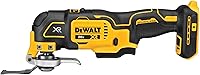
The bigger mismatch is between tool types. A sawzall blade won't go into an oscillating multi-tool, which uses a pin-and-blade mount.
If you own both tools, each needs its own blade supply. Our guide to how to use an oscillating multi tool covers what those blades do best.
Which blade material should you pick?
Bi-metal blades handle mixed and unknown materials, while carbon steel suits clean wood. The material decides how long the blade lasts and what it can cut safely, not whether it mounts.
Bi-metal blades weld a hard tooth edge to a flexible body, so they cut metal, pipe and nail-embedded wood without snapping. TOLESA uses high density bi-metal with 8% cobalt for its metal blades, which it says adds wear resistance in thick metal.
Carbon steel blades are cheaper and cut clean wood quickly. They dull fast on nails or metal, so keep them for fresh lumber and pruning.
For salvage work and demolition, bi-metal is the safer buy.
Which metal blade set suits heavy cutting?
The TOLESA 5-pack is built for metal. Its 9 inch blades run 14 TPI, with a 0.9 mm thin wall and set teeth that TOLESA says reduce heat and speed up cuts in sheet metal from 2 to 8 mm and solid pipe under 7 inches across.
The cobalt edge and dense teeth give a longer working life than a standard bi-metal blade in demolition. All five blades are the same size, so the pack suits someone who cuts metal often and wants spares.
There are no wood or short blades here.
If you're new to the tool, read how to use a reciprocating saw before your first metal cut.
How do you change a blade safely?
Release the clamp, pull the old blade, seat the new one fully and lock it. The steps are quick once you've done them, and the fit is the same for every standard blade.
- Unplug the saw or remove the battery.
- Find the blade clamp, either a lever or a collar.
- Open the clamp and pull the blade straight out.
- Slide the new blade in until it seats against the stop.
- Lock the clamp and tug the blade to confirm it holds.
Wear gloves, since used blades stay sharp and get hot. Our walkthrough of how to change a blade on a reciprocating saw covers the lever and collar styles step by step.
A blade that wobbles after locking isn't seated, so pull it and try again.
Which blade set suits a full shop?
The DEWALT 12-piece set suits a shop that wants a durable mix in a case. It combines wood blades at 6 TPI with metal blades at 14 and 18 TPI and a 10 TPI demolition blade.
DEWALT says the tooth forms give up to 50% longer life than its prior generation blades.
The tall, thick blade profile is meant for straight cuts in heavy metal and tough demolition work. A telescoping case holds the set and fits inside a power tool kit box.
Skip it if you rarely cut metal. The set leans toward metal and demolition blades, so a wood-heavy buyer gets fewer blades for the money.
What should you check before ordering blades?
Check the shank size first, then the blade length and tooth count for your materials. The shank tells you whether it fits.
Length and pitch tell you whether it works.
A quick order of decisions:
- Confirm your saw takes a 1/2 inch shank.
- Pick length by the depth of the cut.
- Pick tooth count by the material and finish.
- Pick bi-metal for mixed or unknown materials.
- Buy a mixed set if you cut more than one material.
Most people end up with a mixed set for general work and one pack of metal blades for heavier jobs.
So, are sawzall blades universal?
Yes, in the way that matters: the 1/2 inch shank fits most reciprocating saws, so blade choice comes down to length, teeth and material. Buy the blade that matches your cut, not the blade that matches your saw's brand.
For most homes, the WORKPRO 32-piece set is the one to start with, since it covers wood, metal and pruning in a single pouch. The TOLESA 5-pack is the pick when metal is your main work, and the DEWALT 12-piece set suits a shop that wants bi-metal blades and a case.
Before your first cut, our guide to how to use a reciprocating saw covers the safe grip and the right blade angle. And if you're deciding between tools for a job, what an oscillating multi tool is used for explains where a sawzall stops and a multi-tool starts.
Frequently asked questions
Will a Milwaukee blade fit a DEWALT saw?
Yes. A 1/2 inch shank blade from Milwaukee fits a DEWALT reciprocating saw, and the reverse works too.
The blade brand and the saw brand don't need to match, since the clamp only cares about shank size.
What TPI should I choose for wood and metal?
Rough wood takes about 6 to 8 TPI for fast cuts. Metal takes 14 to 24 TPI for smooth edges.
A mixed set lets you swap between both without buying separate blades.
Are longer sawzall blades better?
Only when the cut needs reach. A 6 inch blade is easier to control for everyday work.
Save the 9 inch blades for thick timber, deep pipe cuts and demolition where the extra length matters.
Can I use a sawzall blade in an oscillating multi-tool?
No. Sawzall blades use a 1/2 inch reciprocating shank, while oscillating tools take a pin-and-blade mount.
They are separate systems, so each tool needs its own blades.